10 online business ideas for beginners in 2026
You don't need a groundbreaking idea to start an online business.
Most successful online businesses are simple. Someone saw a problem, figured out how to solve it, and found people willing to pay. No venture capital. No technical genius. Just a useful thing that people wanted.
Here are 10 ideas that are working right now, with real examples and honest takes on each.
1. Digital products
Sell something you create once and deliver forever. Templates, guides, spreadsheets, Notion setups, design assets. No inventory. No shipping. You make it, upload it, and it sells while you sleep.
Kazi Mohammed Erfan noticed that Webflow templates were either ugly or overpriced. He started making better ones. Now he earns $15,000 a month selling templates.
You don't need to be a designer. People sell budget spreadsheets, resume templates, workout plans, recipe cards. If you've solved a problem for yourself, you can probably package that solution and sell it.
To get started: Create a simple waitlist page describing your product. Share it on social media, in communities, wherever your potential customers hang out. If people sign up, you have demand. Then share your progress as you build. By the time you launch, you'll have an audience waiting to buy.
2. Online courses and coaching
Teach what you know. You don't need credentials or a degree. You just need to know something that other people want to learn.
One in three Americans has taken an online course. The people teaching those courses aren't all professors. They're people who got good at something and decided to share it.
The topic doesn't have to be fancy. People pay to learn guitar, Excel, watercolor painting, dog training, sourdough baking. If you can help someone go from confused to confident, that's valuable.
To get started: Put up a waitlist for your course idea. Share what you'll teach and who it's for. If people sign up, offer to teach the first few for free in exchange for feedback. Share what you're learning as you develop the course. When you launch, those early students become your testimonials and first paying customers.
3. Newsletter
Write about something you find interesting. Build an audience of people who want to hear from you. Make money through sponsorships, paid subscriptions, or selling your own stuff.
Dan Ni started TLDR as a side project in 2018, curating tech news in a 5-minute read. It started as just him, spending 30 minutes a day writing. Today it reaches over 7 million subscribers and generates eight figures in annual revenue.
The beauty of newsletters is that you own your audience. Instagram can tank your reach tomorrow. But your email list? Those people chose to hear from you, and no algorithm can take that away.
You can write about anything: tech news, local events, book recommendations, industry insights, parenting tips. The key is being useful and consistent.
To get started: Create a signup page explaining what your newsletter is about. Share it publicly and see if anyone subscribes. Write your first 5 to 10 editions and share snippets as you go. If people forward your emails to friends, you have something worth pursuing.
4. Print on demand
Design t-shirts, mugs, posters, or phone cases. When someone buys, a company prints it and ships it for you. You never touch inventory or pack a box.
This works especially well if you have an audience. Fans of your content, members of a community you belong to, people who share an inside joke. A design that means something to a specific group will always outsell a generic "cool" design.
The margins aren't huge (typically 20 to 30%), but there's almost no risk. You don't pay for anything until someone buys.
To get started: Create a landing page showing your design concepts. Post mockups on social media and collect emails from people who want to buy. Share your design process publicly. The designs that get the most signups are the ones worth producing first.
5. AI services
Most businesses know they should be using AI. They've heard about ChatGPT and automation. But they don't know where to start, and they don't have time to figure it out.
That's where you come in. You don't need to build AI. You need to understand how to use it and explain it to people who don't.
This could mean helping a real estate agent automate their email responses, setting up a content workflow for a marketing team, or showing a small business how to use AI for customer service. The tools already exist. You're just the person who knows how to connect them.
Freelancers with AI skills are earning 22% more than those without. The gap is real.
To get started: Create a simple page offering free AI audits. Share it with local business owners and on LinkedIn. Document what you learn from each audit and share those insights publicly. The businesses that want help implementing your recommendations become your first paying clients.
6. Social media management
Businesses need to post on social media. Most of them are bad at it, or too busy to do it well. If you understand how platforms work, you can get paid to handle it for them.
This isn't just about posting pretty pictures. It's about understanding what content works, engaging with followers, and helping businesses actually get something out of their social presence.
Short-form video is especially valuable right now. If you can edit Reels or TikToks, businesses will pay for that skill.
To get started: Create a page offering your social media services. Find one client to manage for free for 30 days. Document your process and results publicly. That case study becomes the proof that lands your first paying clients.
7. Memberships and subscriptions
Instead of selling something once, sell access to something ongoing. This could be a community, exclusive content, monthly curated products, or regular coaching calls.
Hell Gate is a local news site covering New York City. Seven journalists started it in 2022 with $28,000. Three years later, they have 9,000 paying subscribers and bring in $70,000 a month.
The magic of subscriptions is predictability. You know roughly how much money is coming in next month. That's a luxury most businesses don't have.
To get started: Create a waitlist describing your membership and what it costs. Share it publicly and see who signs up. Give early signups behind-the-scenes updates as you build. When you launch, they become your founding members.
8. Dropshipping
Sell products online without keeping inventory. When someone orders, your supplier ships directly to them. You're the middleman.
Honest take: this one is harder than it looks. Only about 10% of dropshipping stores actually turn a profit. Margins are thin, and the real skill isn't setting up a store. It's getting people to visit it.
If you're good at marketing, especially paid ads, dropshipping can work. If you're a complete beginner with no marketing experience, this probably isn't the best place to start.
To get started: Before spending money on ads, create a landing page for your product idea. Share it in communities and on social media. If people sign up to hear when it's available, you have demand. If nobody does, try a different product before wasting money on ads.
9. Small software tools
Build a simple tool that solves a specific problem. Charge people monthly to use it.
You don't need to be a programmer anymore. Tools like Bubble, Webflow, and Zapier let you build software without writing code. And AI can help you figure out the parts you don't understand.
TypingMind is just a nicer way to use ChatGPT. It makes $50,000 a month. One person built it.
The key is solving a real problem for a specific group of people. Not "an app for everyone." A tool for real estate agents. A dashboard for Etsy sellers. A scheduling tool for podcasters. Specific beats broad.
To get started: Create a waitlist page explaining what your tool does and the problem it solves. Share it publicly to see if anyone cares. Build in public and share your progress. Get your first 10 users from that waitlist. If they complain when you threaten to shut it down, you have something real.
10. Affiliate content
Create content that helps people decide what to buy. When they purchase through your link, you get a cut.
This works as blogs, YouTube videos, TikToks, or newsletters. Review products you actually use. Compare options. Help people make better decisions. When they buy, you earn a commission.
Wirecutter built an entire business on product reviews and got acquired by The New York Times. You don't need to be that big. Smaller niche sites in specific categories can bring in solid income.
The catch: this takes patience. Search traffic takes months to build. You need to genuinely care about the topic, because you'll be writing about it for a while before you see results.
To get started: Pick a niche and create a landing page to collect emails from people interested in your recommendations. Write your first 5 reviews of products you actually use. Share your content publicly and see what resonates. Build trust before expecting commissions.
How to pick one
Ten options can feel overwhelming. Here's how to narrow it down.
| Idea | Time to first $ | Effort to start | Best if you're good at |
|---|---|---|---|
| Digital products | Medium | Low | Design, organizing |
| Courses & coaching | Medium | Medium | Teaching, expertise |
| Newsletter | Slow | Low | Writing, consistency |
| Print on demand | Medium | Low | Design, niche audiences |
| AI services | Fast | Low | Tech, explaining |
| Social media | Fast | Low | Content, trends |
| Memberships | Medium | Medium | Community, curation |
| Dropshipping | Slow | High | Marketing, ads |
| Software tools | Slow | High | Problem-solving |
| Affiliate content | Very slow | Low | Writing, patience |
What do you already know? Start where you have an advantage.
How fast do you need money? Services pay quickly. Products take longer but scale better.
What will you actually stick with? If you hate writing, don't start a newsletter. If you hate client work, don't freelance. Be honest with yourself.
The pattern behind every idea
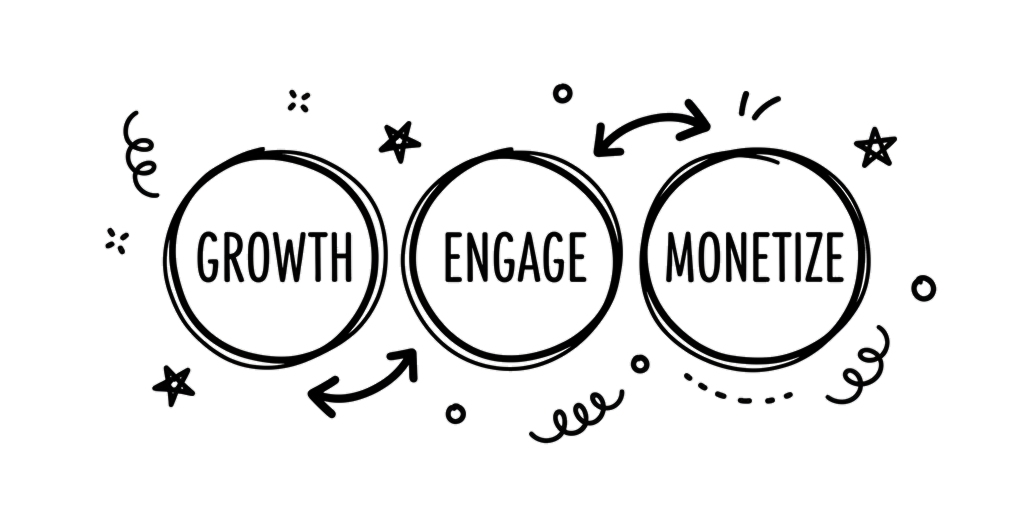
Notice how every "To get started" follows the same structure?
| Stage | What to do |
|---|---|
| Grow | Create a landing page. Share your idea publicly. See if anyone signs up. |
| Engage | Share your progress. Post behind-the-scenes updates. Let people watch you build. |
| Monetize | Launch to an audience that already knows, likes, and trusts you. |
This is how every successful online business starts. Not with a finished product. With a simple page that captures interest and an audience that grows with you.
Ready to test your idea?
LaunchSoon helps you create a beautiful landing page in minutes. Share your idea, collect signups, and find out if people actually want what you're building.