How to validate a business idea before you build it
You have an idea. A course, a template pack, a coaching program, an app. You can see it clearly. You're excited. You're ready to build.
So you spend the next three months creating it. Recording videos. Designing assets. Writing copy. Perfecting every detail.
Then you launch. And almost nobody buys.
This isn't a horror story. It's the most common story in the creator economy. According to CB Insights, the number one reason startups fail is "no market need." Not bad execution. Not running out of money. Simply: nobody wanted what they built.
The painful part? You could have found this out in days, not months.
The backwards approach most creators take
Most creators follow this path:
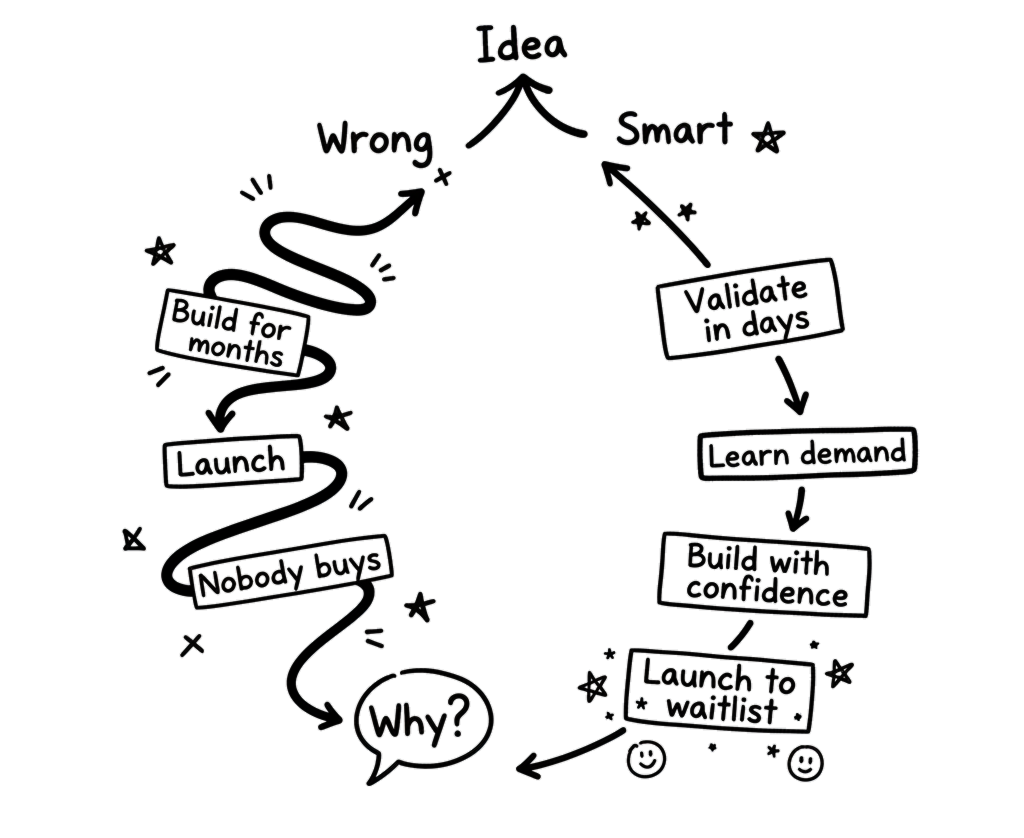
The left path feels productive. You're building. You're creating. You're making progress.
But it's an illusion. You're not making progress toward a successful launch. You're making progress toward finding out if your idea works. And you're taking the slowest, most expensive route to get that answer.
The right path feels scary. What if nobody signs up? What if your idea isn't as good as you thought?
That's exactly why it works. You find out fast. You either validate demand and build with confidence, or you learn early and pivot before wasting months.
Why creators skip validation
If validation is so valuable, why do most creators skip it?
Excitement blinds us. When you have a new idea, it feels special. You can imagine the finished product, the happy customers, the revenue. This excitement is fuel for building, but it's poison for objective evaluation.
Fear of rejection. Validation means putting your idea in front of strangers and asking: would you want this? That's vulnerable. It's easier to build in private where nobody can say no.
The "build it and they will come" myth. We've all heard stories of products that launched to instant success. What we don't hear about are the thousands of products that launched to silence. Survivorship bias makes us overestimate our odds.
Sunk cost psychology. Once you've spent a week on something, it's hard to abandon it. So you spend another week. Then another. Validation before building means you have nothing to lose, which is precisely why it feels uncomfortable.
What validation actually means
Let's be specific about what counts as validation and what doesn't.
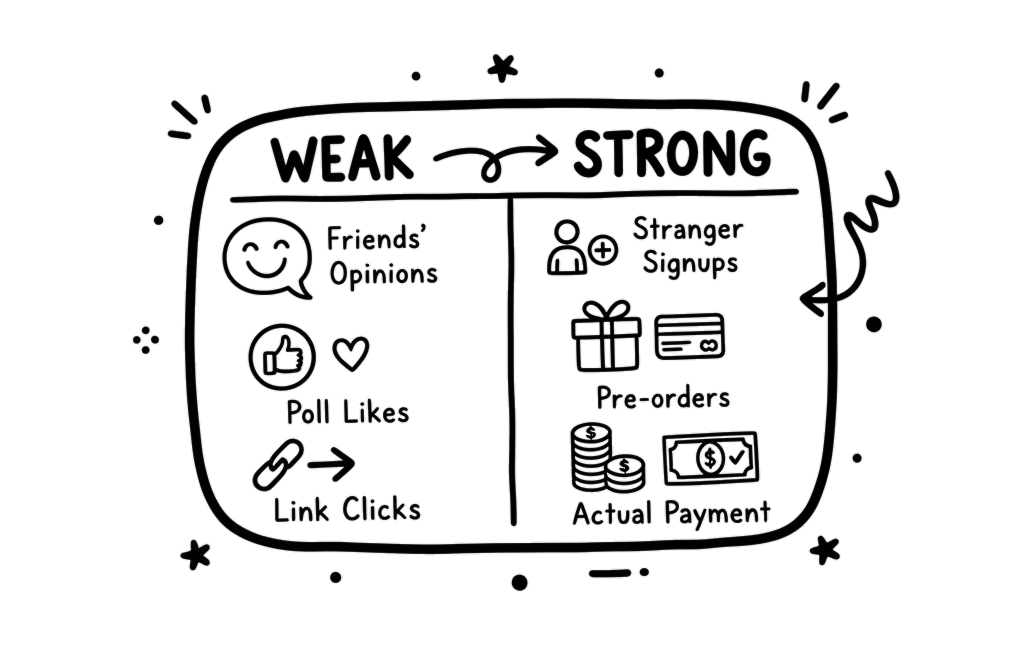
Not validation:
- Your friends say it's a good idea (they're being nice)
- You posted a poll and got likes (engagement isn't commitment)
- People said "I'd definitely buy that" (talk is cheap)
- You did market research and found a gap (gaps exist for reasons)
Real validation:
- Strangers sign up with their email (they gave you something real)
- People share it with others (they're vouching for you)
- Someone pre-orders or pays a deposit (money is the ultimate signal)
- You have a waitlist that keeps growing organically (sustained interest)
The difference is action. Opinions are free. Actions cost something: time, attention, money, reputation. When strangers take action for your idea, you have signal.
The waitlist test
The simplest way to validate an idea is the waitlist test.
Here's how it works:
- Create a landing page that describes what you're building
- Explain who it's for and what problem it solves
- Add a way for people to sign up (email capture)
- Share it publicly
- See what happens
That's it. No product required. No code. No design skills. Just a clear description and a way to capture interest.
The waitlist test works because it mirrors real buying behavior. People who sign up are saying: "This sounds interesting enough that I want to hear more." That's the first step toward becoming a customer.
If strangers won't even give you their email, they definitely won't give you their money.
What the numbers tell you
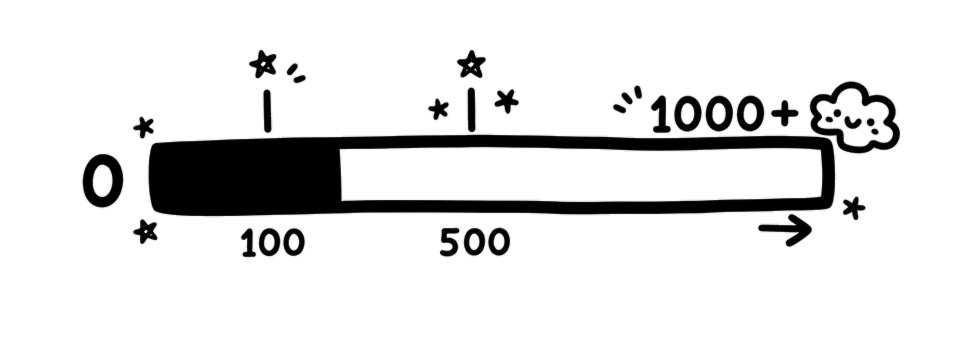
100 signups means your idea resonates beyond friends and family. Strangers found it compelling enough to act. This is your first real signal.
500 signups is validation. At this point, you have evidence of real demand. You're not guessing anymore.
1,000+ signups means you can launch with confidence. You have a built-in audience waiting for what you're creating.
These numbers aren't magic thresholds. They're guidelines. A niche B2B product might validate with 50 signups from the right people. A mass-market consumer product might need 2,000 to feel confident.
The point is: set a target before you start, and let the data guide your decisions.
Other ways to validate
The waitlist test isn't the only approach. Here are other methods, with honest pros and cons:
Pre-sales
Sell your product before it exists. This is the Kickstarter model: describe what you'll create, set a price, and see if people buy.
Pros: Money is the strongest validation signal. If someone pays, they really want it.
Cons: Requires more trust (people are betting on you to deliver). Higher barrier means fewer conversions. You're committed to building once people pay.
Best for: Creators with an existing audience who trust them.
Audience research
If you have an existing audience, ask them directly. Not "would you buy this?" but "what's your biggest struggle with X?" Let their answers guide your product.
Pros: Direct insight from potential customers. Builds engagement with your audience.
Cons: Only works if you already have an audience. People don't always know what they want. Requires skill to interpret responses.
Best for: Creators choosing between multiple ideas.
Competitor analysis
Are people already paying for similar solutions? If yes, there's proven demand. If no, ask why.
Pros: Fast research. Shows pricing expectations. Reveals what's already working.
Cons: Existing competition means you need differentiation. No competition might mean no market (not always a blue ocean).
Best for: Validating that a market exists before testing your specific angle.
Customer conversations
Talk to 10 potential customers. Not a sales pitch. A genuine conversation about their problems, what they've tried, what's missing.
Pros: Deep insight you can't get from surveys. Builds relationships. Often reveals opportunities you didn't consider.
Cons: Time-intensive. Requires access to potential customers. Small sample size can mislead.
Best for: Complex or high-ticket offers where understanding the customer deeply matters.
How to read the signals
You've shared your landing page. Now what?
Signs of strong validation
- Signups keep coming without you actively promoting
- People share it with others unprompted
- You get messages asking when it will be ready
- The signup rate increases over time
- People offer to pay early or ask about pricing
Signs of weak validation
- Only friends and family sign up
- Signups stop when you stop promoting
- High traffic but low conversion (people look but don't act)
- Polite interest but no urgency
- Silence
The hardest part
Accepting negative signals is hard. You've told people about your idea. You've put yourself out there. Admitting it's not working feels like failure.
But it's not failure. It's information. Information you got in days instead of months.
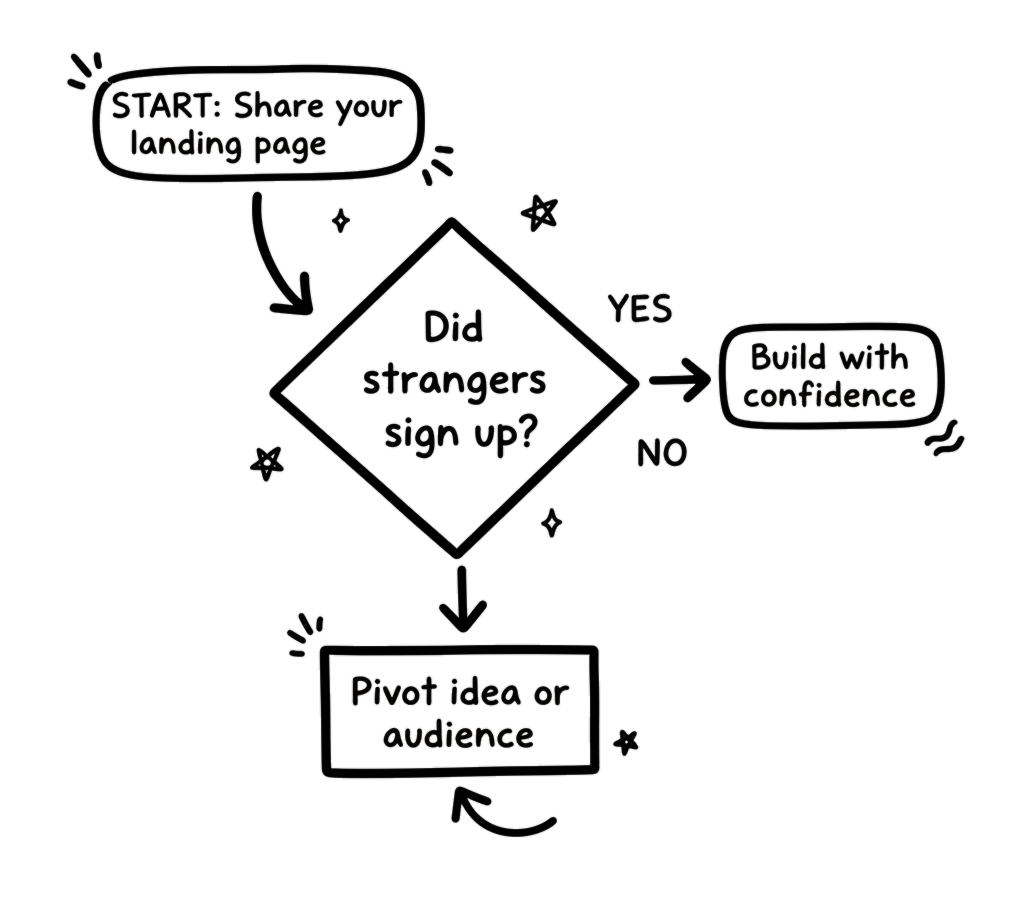
Every outcome from validation is a win:
- Strong signal? Build with confidence.
- Weak signal? Pivot before you waste time.
- No signal? Move on to a better idea.
The only way to lose is to never test.
What to do after validation
If your idea validated
Congratulations. You have evidence that people want what you're building. Now:
- Keep engaging your waitlist. Send updates. Share your progress. Make them feel like insiders.
- Build the minimum version. Don't over-engineer. Get something real in front of your early supporters as fast as possible.
- Launch to your waitlist first. They've been waiting. Reward them with early access, special pricing, or exclusive bonuses.
- Collect feedback and iterate. Your first version won't be perfect. Your waitlist will help you make it better.
If your idea didn't validate
This isn't failure. This is the system working.
Ask yourself:
- Was the idea wrong, or was the audience wrong?
- Was the problem real but my solution off?
- Was my messaging unclear?
Sometimes a small pivot changes everything. Different positioning. Different audience. Different angle on the same problem.
Sometimes the idea just isn't right, and that's okay. You found out in days. You can try something else tomorrow.
Validation is a gift
Most creators treat validation like a hurdle. Something to get through so they can start building.
That's backwards.
Validation is a gift. It's a way to peek into the future and see if your idea has legs. It protects you from spending months on something nobody wants. It gives you confidence when you do decide to build.
The goal isn't to prove you're right. The goal is to find out fast.
Some ideas will validate. Some won't. Both outcomes make you better.
The only mistake is building in the dark, hoping for the best, and finding out too late.
Ready to validate your idea?
LaunchSoon helps you create a beautiful landing page in seconds. Describe your idea, capture signups, and find out if people actually want what you're building.
No design skills needed. No code required. Just your idea and a way to test it.